
Karacakılavuz Dimi Weaving Geographical Indication Registration Certificate
This geographical indication was registered on 30.10.2019 and has been protected under the Industrial Property Law No. 6769 since 27.06.2018.
Registration No : 467
Registration Date : 30.10.2019
Application No : C2018/141
Application Date : 27.06.2018
Name of the Geographical Indication : Karacakılavuz Twill Weaving
Product / Product Group : Weaving / Textiles
Type of Geographical Indication : Designation of Origin
Registered By : Tekirdağ Provincial Directorate of Culture and Tourism
Address of Registrant : Orta Cami Mah. Hasan Efendi Cad. No:8/1 Süleymanpaşa TEKİRDAĞ
Geographical Boundary : Süleymanpaşa district of Tekirdağ province
Usage Method : The geographical indication label shall appear on the product together with the trademark and shall not be smaller than the trademark label.
Description and Distinctive Characteristics of the Product:
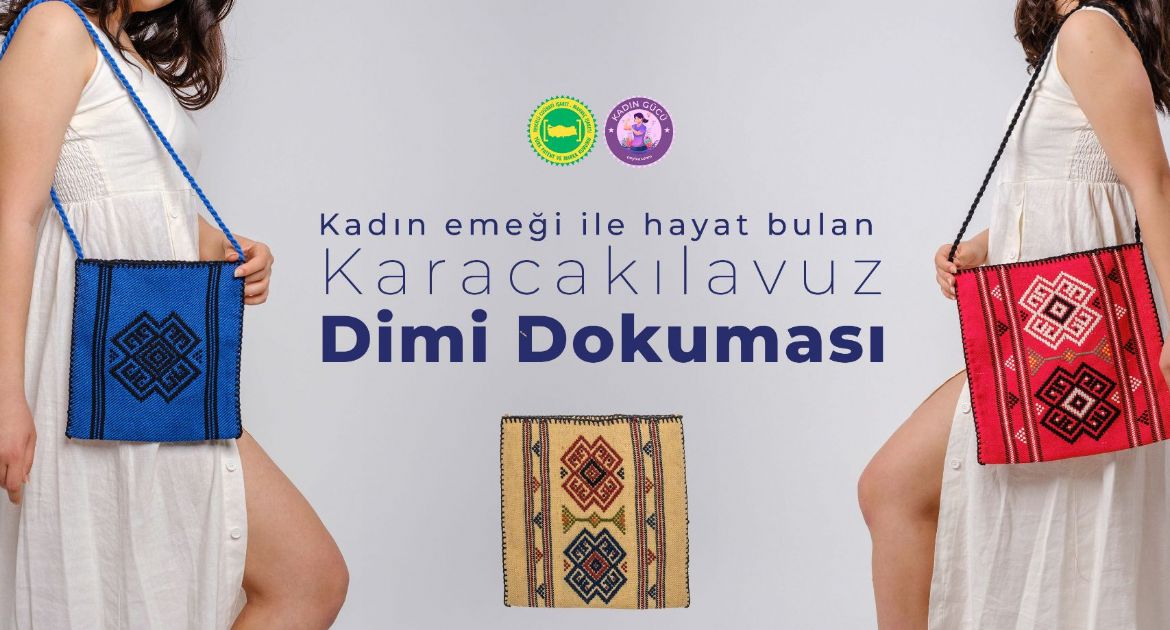
Karacakılavuz is a neighborhood in the Süleymanpaşa district of Tekirdağ province and one of Anatolia’s important weaving centers. Regional weavings are produced on four-pedal looms called “düzen,” made from oak and hornbeam trees. The most distinctive feature of these weavings is the combined use of twill weaving and cicim technique from shuttle weaving traditions. Karacakılavuz Twill Weavings are made using factory-produced wool and cotton yarns. The yarns used in these vivid-looking textiles are colored with natural and aniline dyes. Karacakılavuz Twill Weavings are used in nazarlık amulets, prayer rugs, curtains, cushion covers, saddlebags, bags, and clothing, and are designed in five different composition schemes: horizontal, vertical, scattered, central, and mihrab-style.
Production Method:
Regional weavings are woven on four-pedal looms called “düzen,” made from oak and hornbeam trees. The most important feature of these textiles is the combined use of twill weaving and the cicim technique from shuttle weaving traditions.
The yarns to be used in weaving arrive in skein form and are wound into balls using a tool called gülcana/elemye. Once 15 yarn balls are prepared, the yarns are ready for warp preparation. The 15 yarn balls are placed into separate bags and warp preparation begins.
A weaving base of 65 cm width and desired length is prepared from 740 threads. The yarns are taken from the stakes and wrapped onto the beam with the help of three people. The heddles are placed high and the yarns are threaded through them using the heddling technique with the help of two people. Then, two threads are passed through each reed section with the help of two people. Finally, the yarns are tied to the loom and weaving begins. The distinguishing feature of the twill weaving technique is the use of four heddles and double-thread reed threading.
There are 12 main traditional motifs used in Karacakılavuz Twill Weaving:
Dog paw motif
Ram’s horn motif
Sheep’s eye motif
Snowflake motif
Oak branch motif
Peacock motif
Locks motif
Three roses motif
Quince core motif
Horseshoe motif
Stars motif
Lamps motif
The motifs are woven on a 65 cm wide surface of the desired length. The motifs are embroidered onto the twill weave using the cicim technique. Rugs, prayer rugs, saddlebags, curtains, cushion covers, wall decorations, wall panels, and nazarlık amulets are produced from Karacakılavuz Twill Weaving.
Special tools used in production include:
Wool comb: A tool used for combing washed and dried sheep wool.
Spinning wheel: A tool used for twisting yarn by rotating the spindle manually or with foot power.
Elemye (Gülcan): A tool used for winding yarn skeins into balls.
Shuttle: A tool that allows the weft thread to pass through the shed to connect warp and weft threads.
Bobbin: A tool attached to the spinning wheel, around which the weft thread is wound and inserted into the shuttle during weaving.
Weaving Loom: Four-pedal looms called “düzen” are used in Karacakılavuz Twill Weavings. The loom consists of balance legs that stabilize the structure, front and rear beams where warp threads are wound, heddles separating the warp threads, reeds compressing the weft threads, pedals lifting warp threads in sequence, and parts called “gericek” used for tensioning the warp threads stretched on the loom.
Production, Processing and Other Operations That Must Take Place Within the Geographical Boundary:
Karacakılavuz Twill Weavings have a reputation identified with the region. All stages of production take place within the specified geographical boundary.
Inspection:
The inspection authority checks whether traditional motifs are processed in Karacakılavuz Twill Weavings, whether these motifs are produced in accordance with the twill technique, and whether the product carries the geographical indication label. The inspection authority consists of three people coordinated by the Tekirdağ Provincial Directorate of Culture and Tourism, including one representative each from Tekirdağ Namık Kemal University Faculty of Engineering, Tekirdağ Public Education Center Directorate, and Karacakılavuz Small Arts Cooperative.
Inspections are carried out once a year and whenever consumer complaints arise. Following the inspection, a report is prepared and submitted annually to the Turkish Patent and Trademark Office. The inspection authority may benefit from or purchase services from experts or institutions from public or private organizations during inspections. The registrant carries out legal procedures for the protection of rights.